Art is not about art. Art is about life, and that sums it up. – Louise Bourgeois, 1911-2010.
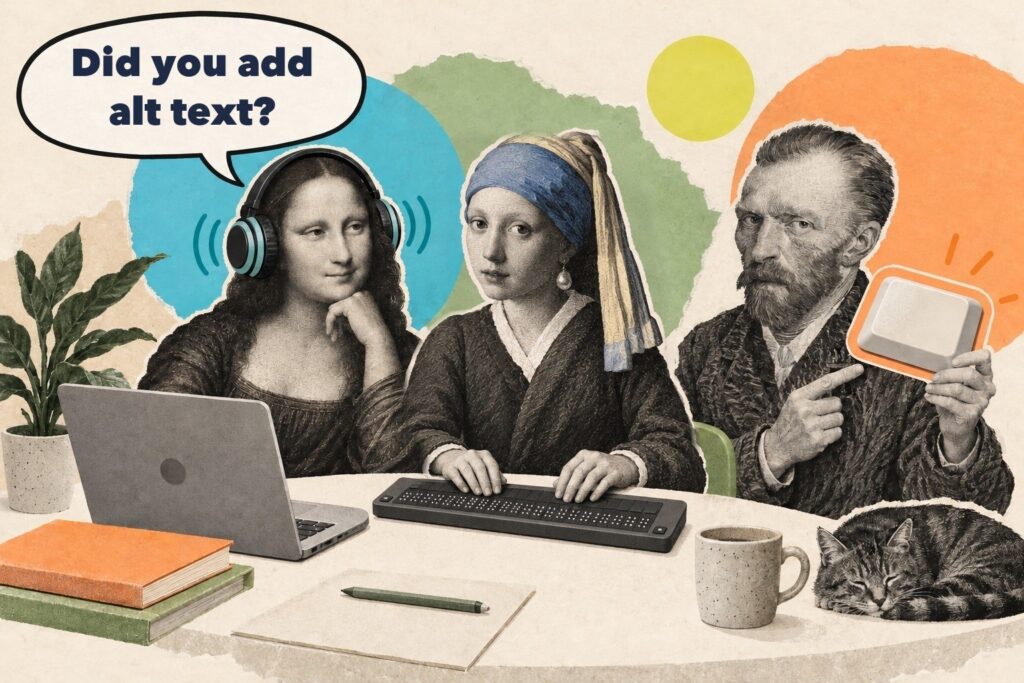
braille display.
I always believed that art /art history should be accessible to all. But I also had to accept the limitations that existed, which excluded visually impaired audiences. Today, however, the extraordinary tools available make art and images accessible to all to enjoy, learn, and appreciate. It is so exciting to be able to introduce art to those who could not connect with it until now. Amazing!
This is my last semester as a faculty member at CSUCI. I started in 2002 and have been Professor of Art History since 2006. Last spring I found out that my Fall 2026 ARTH 204 class needed to be modified to be accessible to visually impaired students. I accepted the challenge and embarked on a journey that turned the end of my teaching career into a commencement: a journey into a novel and extremely rewarding experience. The material I teach can be accessed by those who have been previously left out of the marvelous world of art!
The project of making course materials –and particularly PowerPoint presentations– accessible was gratifying and exciting, but not without challenges. The specific processes (alt text, reading order, etc.) are in fact not complicated at all, and learning to use these tools was fascinating. I found the reading order to be the most interesting part of the process, as it made me think more deeply about how the flow of the narrative was defined by the fixed arrangement of intertwined texts, images, and online resources. More than once, I went back and made changes. Undoubtedly, the alt text is a key element for images. I believe, however, that connecting the alt text to other resources in the slide/presentation alleviates the need for an extensive description. No matter how easy or straightforward they might be, all the steps require a lot of time, attention, and a meticulous approach. Making the material accessible is a laborious and slow process. The final outcome is, however, very rewarding.
I would like to thank Ana Peñaranda (TLi Learning Designer) and Cheri Owen (CI art student, artist, and abilities advocate). Ana’s outstanding expertise as a learning designer was key in this process. Equally important has been Cheri’s contribution. Cheri, who is enrolled in the course, tested the material and was able to identify what works and what doesn’t. The successful outcome of this project was the result of our fruitful collaboration. I am also grateful for the support of the Art Program.
A few words from Ana
I’m Ana Peñaranda, a Learning Designer with Teaching and Learning Innovations (TLi). I want to thank Cheri first, and then Irina, for letting me be part of this work and for trusting the process. From the start, Irina wanted everyone in her class to enjoy the world of art history, not only one student but everybody. So we began with the student: what they needed and what they could not reach. As Irina says, this was a collaboration, and none of us could have done it alone. If you are starting this work in your own course, you are not alone either. At TLi, we are here to help.
A few words from Cheri
My name is Cheri Owen. I am the first post-baccalaureate student pursuing a joint Post-Bacc and BA in Studio Art here at Channel Islands. I am a non-traditional student and already hold a B.S. in political science. I am an Air Force veteran, and as a student who is blind, I am an advocate for blind and low-vision students on campus.
I am very proud to have been able to offer my feedback in such a collaborative way to assist in advancing accessibility for other blind/low vision and print disabled students and faculty.
A few words from Liz King, interim Chair of the Art Program
As Interim Chair of the Art Program at CSU Channel Islands, I am so grateful for the collaborative effort that went into making our faculty course materials accessible to all students. It was a Herculean task, and it gave me a chance to learn and grow, and to better understand what faculty need to help their students learn.
I want to thank Irina Costache first, and then Ana and Cheri, for inviting me to be part of this work and trusting the process. From the very beginning, Irina’s vision was for every student to experience and enjoy the world of art history. I am looking forward to the upcoming workshop, where these three incredible colleagues will share what they learned along the way.
This work reminds me that accessibility is a shared responsibility, and that real progress happens when we learn and work together. If you are just beginning this work in your own course, you are not alone.
About the Series
As Title II becomes a requirement, we would like to share the experience and the knowledge we gained to help faculty streamline the process of making courses accessible in a series of 6 episodes focused on specific issues in PowerPoint presentations. In these brief episodes, we present what we found to be “best practices.” We are not, however, proposing a template or “one-size-fits-all” approach. We hope that what we learned and tested will provide valuable solutions to make visual material accessible in digital format.
Keep an eye out for the next episodes of this blog series! We welcome questions and comments.
These are the topics of each episode and the dates they will be posted:
- Introduction (November 3). Making Art History Accessible to Blind and Low-Vision Students: Challenge, Opportunity, Collaboration
- Episode #1 (November 10). General Observations and Reflections
- Episode #2 (November 17). Alt Text: AI, Description, and Information
- Episode #3 (November 24). Text Boxes: Format and Content
- Episode #4 (December 1). Reading Order: Creating a Meaningful Narrative
- Episode #5 (December 8). Resources and Links: Informing Students about Sources
- Episode #6 (December 15). Conclusion: Making Our Courses Accessible to All
We look forward to sharing what we learned together this semester.
