Disclaimer: TLi does not currently offer official podcast services. Instead, we use a podcast-style recording format as a creative solution for academic media inquiries.
How it all started
At the beginning of 2025, I received an Academic Media Inquiry from Alison Perchuk, Director of the Center for Integrative Studies, requesting a recorded interview. Initially, the plan wasn’t to create a podcast; it was simply to film the guest standing in front of the camera while Alison asked questions off to the side, as we had done in previous projects.
Days passed as I waited for Alison to confirm her guests’ schedule. Meanwhile, I began to visualize the recording, and it looked, frankly, dull. A static shot of the guest answering questions off-camera didn’t feel engaging. As a perfectionist, I knew I had to elevate it. That’s when the idea of a podcast-style setup came to mind.
Podcasts have become one of the most engaging and visited forms of media today. Everyone I spoke with mentioned a favorite podcast or how they learned something new through one. It made perfect sense to apply this format here. When I presented the idea to Alison, she was thrilled.
The Setup
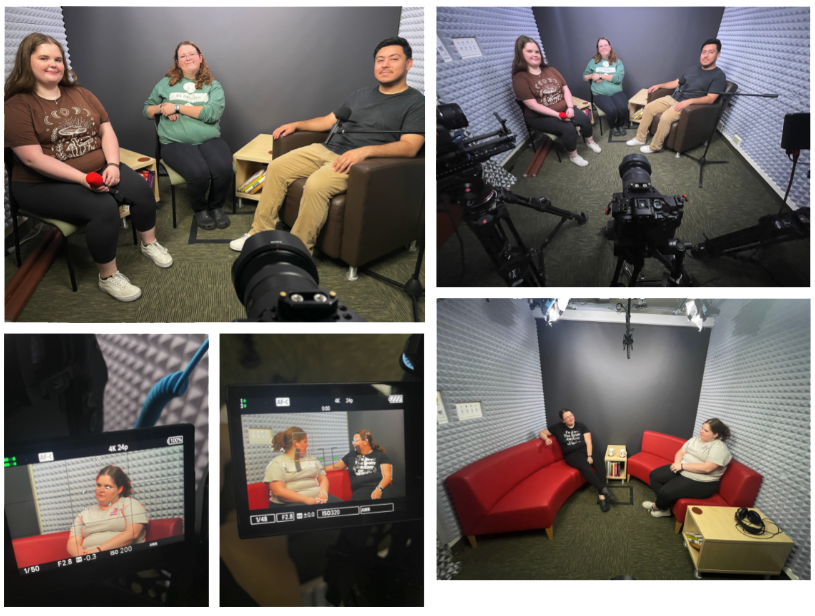
I worked with our student assistants, Arianna and Ellie, to transform our Live Action Room into a cozy, podcast-inspired space.
We experimented with several configurations in the Live Action Room, adjusting layouts based on the number of participants. While the space could accommodate up to three people, I found that two lounge chairs offered the most comfortable and visually balanced arrangement for the host and guest.
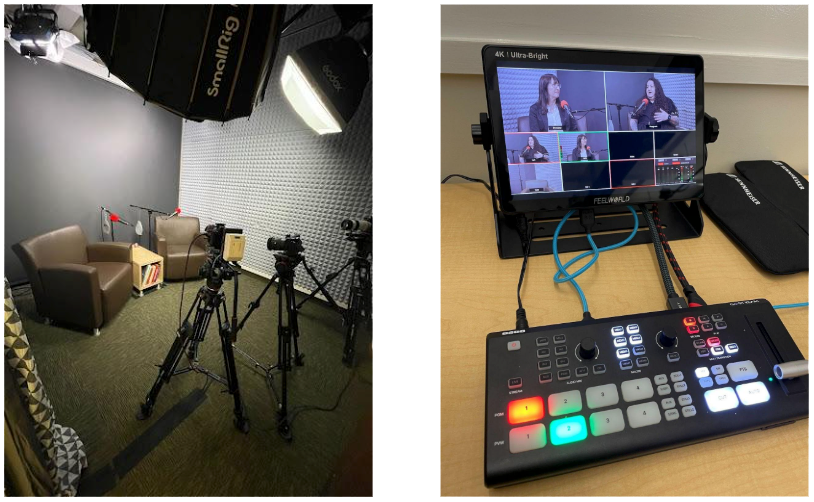
Meanwhile, I operated from just outside the Live Action Room, managing the switchboard, monitoring audio levels, and switching between camera angles in real time.
Did it stick?
Absolutely! Alison was thrilled with the first recording, which featured Catherine Paolillo, former academic librarian at CI, discussing the evolving role of academic librarians. The success continued with a second episode featuring Andrea Grove, Faculty Director of the Center for Global Engagement, who highlighted opportunities within the U.S. Fulbright Student Program.
Curious how they turned out? Check out these samples:
In-person podcast sample
Remote podcast sample
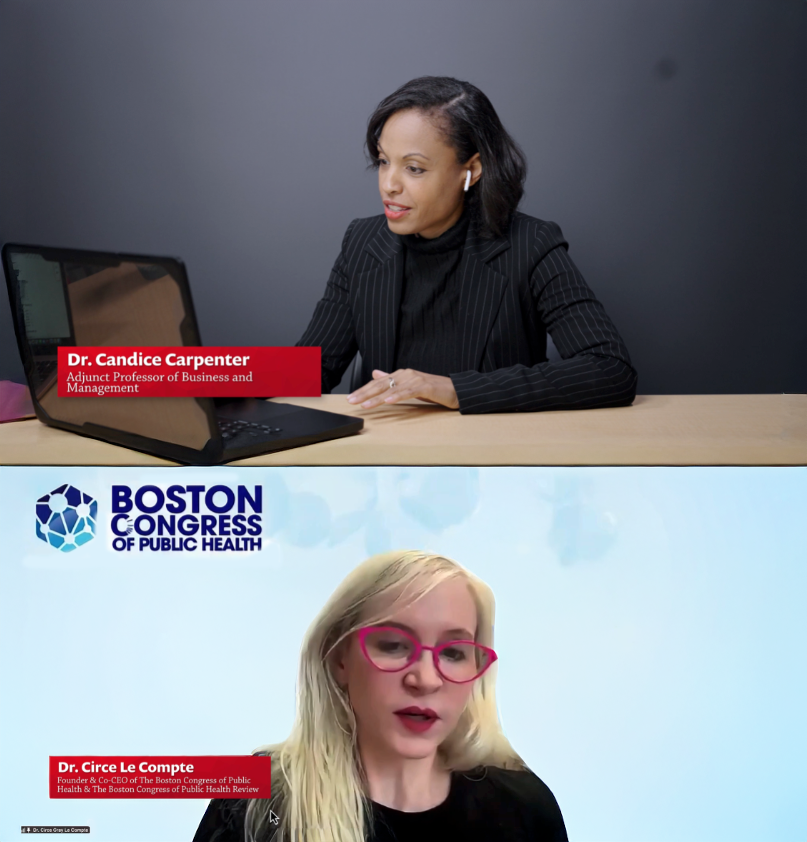
Following these successful episodes, I began offering this format to other faculty members interested in integrating authentic voices into their teaching. One standout project was with Candice Carpenter, Adjunct Professor of Business, who interviewed real-world entrepreneurs to share their journeys with students. These remote interviews were conducted via Zoom, but rather than relying on a basic screen recording, I enhanced production quality by filming Candice in our studio using professional cameras and high-quality audio while integrating Zoom footage of the remote guest. In post-production, I switched between angles to create a more engaging, dynamic visual narrative.
For remote podcast-style recordings, we reconfigured the studio to suit a virtual environment, replacing lounge chairs with a desk and laptop setup for a more focused look.
Creative & Powerful
Each interview is filmed in our Live Action Room, a space designed for comfort and professionalism, featuring couches, ambient lighting, and podcast microphones that create a relaxed, conversational atmosphere. While faculty engage in dialogue inside, I manage the switchboard outside, controlling camera angles and ensuring production quality.
These podcast-style sessions have become powerful pedagogical tools, bridging academic content with lived experience through thoughtfully produced media.
